Planning the 2027 Kick-off: Why the January Slot Gets Booked in October
Published on September 29, 2026

January 2027 has exactly four full working weeks: from 4 to 29 January, since 1 January falls on a Friday. Almost every company wants to schedule its kick-off within this window, and most of them on the same days between Tuesday and Thursday. That works out to twelve dates that everyone is competing for. Whoever asks for space and format only in December takes what's left. Whoever plans in October gets to choose.
Why January is so tight
Four weeks sound like a lot, but they shrink quickly: in many companies, the first week is dedicated to the operational start of the year, and Mondays and Fridays are impractical when there's multi-day travel or evaluation work involved. What remains is a hard core of Tuesdays to Thursdays in the second to fourth weeks of January, on which demand concentrates. Two ways out if your preferred date is taken: the last week of January, which is often freer, or a deliberately later kick-off in early February, which has the advantage that the first figures from the new year are already available.
Clarify the goal: strategy, team building, or both
Before you request rooms, decide what the day should achieve. A purely strategic workshop needs a focused room, good lighting and few distractions. A team kick-off thrives on shared activity, from cooking to a winter hike. Most successful year-start events combine both: goals and figures in the morning, a shared experience in the afternoon. This decision determines everything else, from the room layout and technology to the question of whether a venue with activities within walking distance is needed. Ideas for the active part can be found in the team event overview.
The room: seating layout determines capacity
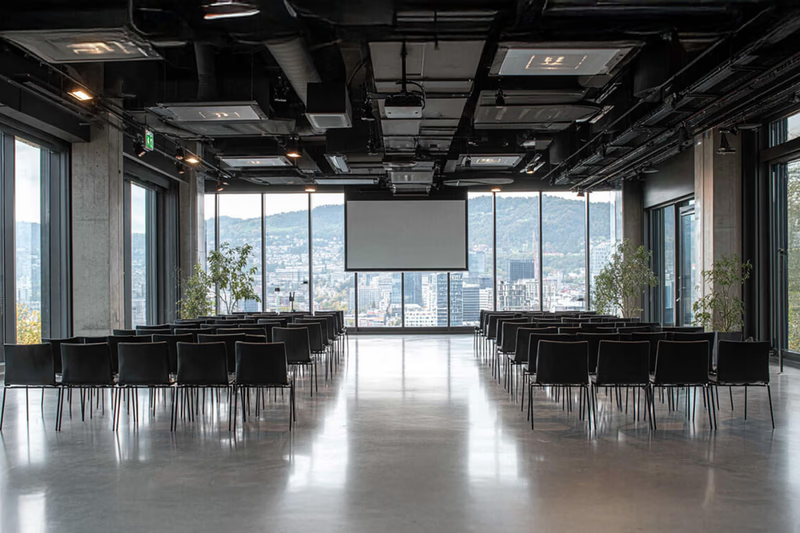
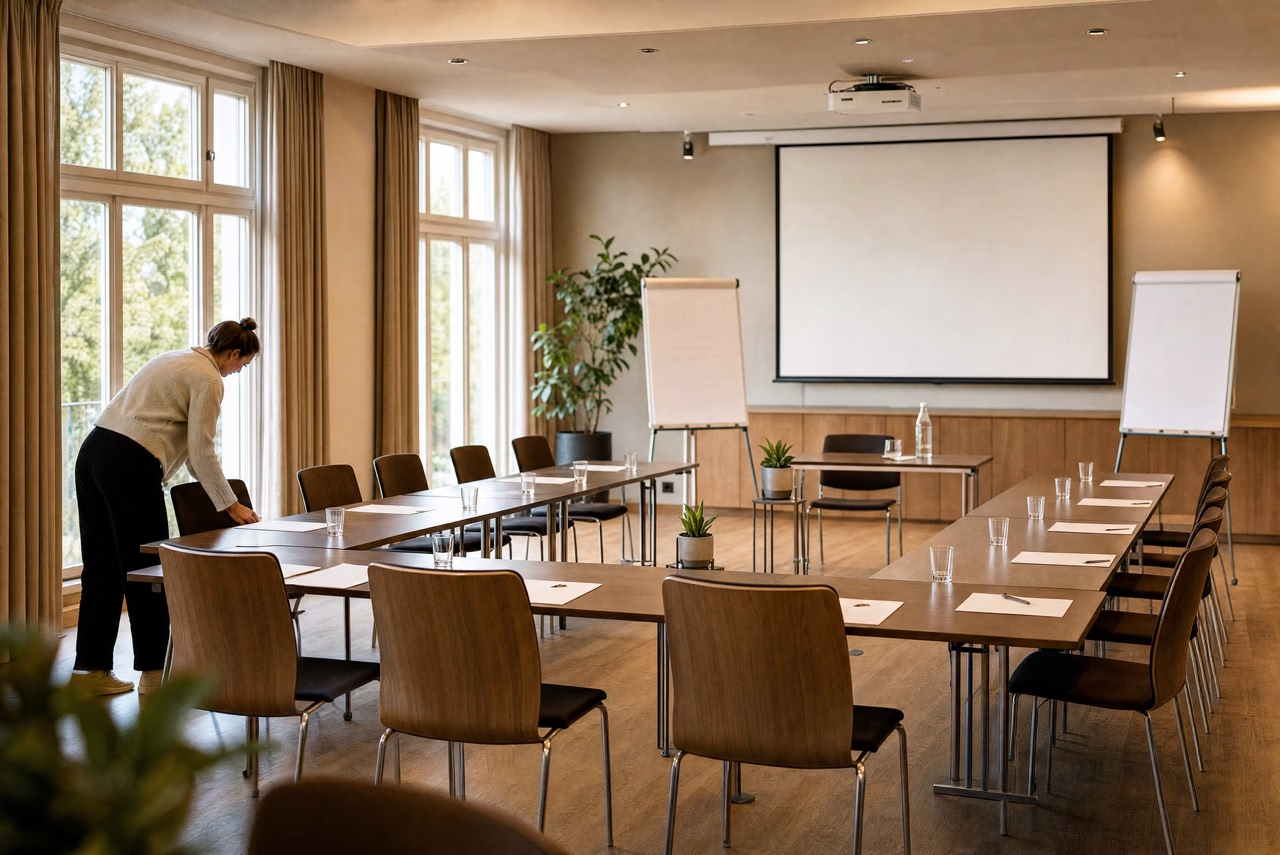
The same room area can hold very different numbers of people depending on the seating layout: theatre-style seating fits the most people, classroom-style seating with tables considerably fewer, and a U-shape for genuine discussions requires the most space per person. So never ask for "a room for 40 people", but rather "40 people in classroom-style seating plus two breakout corners". The listings on EventButler show the capacity per seating type, so you can compare this before making your enquiry. Basic equipment you should ask about: projector or screen, flipcharts, stable Wi-Fi, daylight and adjustable temperature, plus microphones for around 50 participants or more.
Format: day seminar or with overnight stay
A day format saves budget and organisation, but requires everyone to arrive in good time. Distributed teams often fare better with a seminar hotel and an overnight stay: the evening before becomes an informal start, and the day itself begins on time instead of with delayed trains. In January, the weather also plays a role: those heading up to higher altitudes should plan travel buffers and check how the venue is accessible in case of snow. You'll find suitable options in the mountain regions, for example among the seminar rooms in Graubünden, in Valais and in the Canton of Lucerne.

Budget: the items that add up
Calculate using a daily package rate or individual items, but calculate completely: room hire, technology, catering (coffee breaks, lunch, aperitif), facilitation or external speakers, an afternoon activity, and if there's an overnight stay, rooms and dinner, plus transport. Prices vary depending on location, size, facilities and duration; central locations cost more, and weekdays are priced differently from weekends. As always, get two to three comparative quotes for the same date and the same number of participants, so you can see exactly what each package includes.
The timeline, working backwards
| When | What |
|---|---|
| October | Define goal and format, determine number of participants and preferred dates, request quotes from two to three venues |
| November | Confirm venue, build agenda, book speakers and activity |
| December | Send out invitations with programme, finalise technical and menu details |
| January | Hold the event, write up actions and responsibilities in the week after |
The timeline follows the booking window: enquiries in October meet available January dates.
Frequently asked questions
How to proceed
Determine the goal, number of participants and two preferred dates, then request quotes from two to three venues in parallel, so you can compare offers instead of relying on a single figure. The seminar room overview shows verified rooms and seminar hotels throughout Switzerland, with dedicated pages for the Canton of Zurich and the Canton of Bern. The Help Centre explains how an enquiry works and what happens afterwards.
Do you rent out seminar rooms?
Present them on EventButler. The room planner shows your capacity per seating type, and all packages are listed in the offer overview.
Create listing